

Whole Grain Flour Power Book
- Recipes use freshly milled whole grain flour
- Wide variety of recipes
- Education content about whole grains
- Full color
- Over 90 recipes
Whole Grain Flour Power Book
Lounell Claybourn, with her daughter Marianne Claybourn, wrote “Whole Grain Flour Power: Sharing the secrets of baking with incredible flavorful, nutrient-packed, freshly milled flour". Their book is a comprehensive collection of customer favorites from over nine years of their successful farmers market business in Houston Texas.
Whole Grain Flour Power offers an in-depth look at the wonder of wheat and the decline in world health linked to commercially milled flour. This 311-page cookbook includes tools, tips, and techniques for new and experienced bakers, and over 90 easy to follow recipes. You'll find a wide variety of recipes including sweet, savory, and simple breads, desserts, and a fun collection of tortillas, crackers, energy bars and more, all made with freshly milled flour. Full color photos beautifully showcase the end results.
Whole Grain Flour Power reflects a passion for the unmatched flavor and nutrients found in freshly milled whole grain flour. That passion was the motivating force for Lounell and Marianne as they poured their hearts into everything they baked for their farmer's market stand. Customers became “regulars” and then became friends. They held baking classes for those who wanted to learn the skills of milling and baking for themselves and witnessed a growing consciousness of the importance of healthy eating choices for their families. This cookbook began at their request, and it's become their passion now to share it with all “bakers by heart!”
Cookbook features:
- Focus on Freshly Milled Flour: Emphasis on the importance of using freshly milled whole grains, used within three hours of milling, to retain maximum nutrients and flavors.
- Personable Directions: Enjoy the warm and inviting approach to baking, reflected by years of experience in running a successful farmers market baking business.
- Wide Variety of Recipes: From the popular Cranberry Walnut Bread to the savory Caramelized Onion Bread, these recipes cater to both sweet and savory palettes.
- Educational Content: Beyond recipes, the book includes educational sections on the wealth of nutrients in every grain of wheat, an interesting look at the history of commercial flours, and practical tips on home milling.
EDITORIAL REVIEW by Peter Reinhart
"Whole Grain Flour Power, by the mother/daughter team of Lounell and Marianne Claybourn, is a book from the heart and one that will touch yours as well. It is dedicated to the principle that freshly milled whole grain flour is far more delicious and nutritious than commercially milled flour. The proof is in the pudding, as the saying goes, and their book is chock full of easy to make recipes and delicious-looking photos of the many products the Claybourn's have been selling successfully for years at local markets. Reading their story allows us to enter into a world that evokes wholesomeness and a yearning for both a nostalgic past as well as a hopeful future. It has been said that the future of bread can be found in its past, and the recipes and photos in this book transport our longings for that past into the present moment, evoking a renewed belief that, yes, this is what I want, what I've always wanted." — Peter Reinhart, author of The Bread Baker's Apprentice: Mastering the Art of Extraordinary Bread and Peter Reinhart's Whole Grain Breads
WHOLE GRAIN NUTRITION: HARVEST THE BENEFITS!
Imagine that for years, your children ate mainly candy. Imagine that you did, too. Imagine an entire nation on a candy diet. Imagine the health consequences.
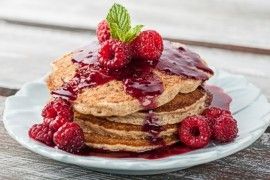 Natural whole grains contain a myriad of health-essential nutrients, from proteins to vitamins, essential
amino acids, and crucial fiber. But "white flour" consists only of the starchy endosperm of the wheat
kernel. In its natural form the endosperm provides wholesome energy, but it's the least nutrient-rich
part of the grain. Removed are the nutrient-packed bran, wheat germ, and wheat germ oil. Then to make
it extra white, industrial processors go further, chemically bleaching it, and returning just enough
of a few vitamins to stave off beriberi and rickets. They're allowed to call the end product "Enriched
Flour" but a truthful label would read "Impoverished Flour." This snow white, denutritionalized substance
is a commodity worth billions of dollars annually to its merchandisers because of a commercially useful
trait: Unlimited shelf life. No matter how long it sits in the mass distribution channel, it can't go
bad precisely because there's actually nothing left in it that can go bad. Nutritionally, it's bad when
bagged. A few companies have grown enormously rich marketing this pseudo-food on the basis of convenience,
ease, and its dazzling white appearance. And to make matters worse, artificial sweeteners, flavors and
colors, appetite stimulants and preservatives are added to many of our foods, including numerous substances
banned by other countries for their unhealthfulness. "Artificial" tells you those things aren't naturally
food. But have you ever wondered
what they actually
are, then? Did you know some of them are actually petroleum derivatives? And what harmful effects
might these complex counterfeit compounds be having on us?
Natural whole grains contain a myriad of health-essential nutrients, from proteins to vitamins, essential
amino acids, and crucial fiber. But "white flour" consists only of the starchy endosperm of the wheat
kernel. In its natural form the endosperm provides wholesome energy, but it's the least nutrient-rich
part of the grain. Removed are the nutrient-packed bran, wheat germ, and wheat germ oil. Then to make
it extra white, industrial processors go further, chemically bleaching it, and returning just enough
of a few vitamins to stave off beriberi and rickets. They're allowed to call the end product "Enriched
Flour" but a truthful label would read "Impoverished Flour." This snow white, denutritionalized substance
is a commodity worth billions of dollars annually to its merchandisers because of a commercially useful
trait: Unlimited shelf life. No matter how long it sits in the mass distribution channel, it can't go
bad precisely because there's actually nothing left in it that can go bad. Nutritionally, it's bad when
bagged. A few companies have grown enormously rich marketing this pseudo-food on the basis of convenience,
ease, and its dazzling white appearance. And to make matters worse, artificial sweeteners, flavors and
colors, appetite stimulants and preservatives are added to many of our foods, including numerous substances
banned by other countries for their unhealthfulness. "Artificial" tells you those things aren't naturally
food. But have you ever wondered
what they actually
are, then? Did you know some of them are actually petroleum derivatives? And what harmful effects
might these complex counterfeit compounds be having on us?
The human body is an absolute marvel; scientists have a long way to go to understand more than a small fraction of how we work. But as capable and as resilient as our bodies are, common sense and history teach that we need wholesome, nutritious food to remain healthy and strong. The denatured byproducts being mass marketed today don't provide what we need, because they've been profoundly altered by processes in which real nutrition is considered last, or not at all.
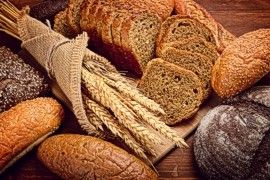 There's a great solution to this problem. By making flour in your kitchen and using the whole grain
flour while it's fresh, you get the nutrition needed for strength and health. You also get far tastier
food, with genuine character—incomparably more satisfying than today's mass marketed pretenders. After
transitioning to whole grains, putting out a plate of white styro-bread will elicit comments like "Why
are you giving us
this
... and where's the
good stuff
?". Even flour labeled as "whole grain" in stores falls far short of what you can easily grind yourself,
because unless it's ground while you wait, the essential Vitamin E in true whole grain flour would go
rancid in days (meaning that it's probably been removed), and all nutrients begin steadily oxidizing-away
from exposure to oxygen as soon as grain is milled. What's in those bags is
not
whole grain flour if it's been sitting on a shelf for even a few days; that's literally impossible.
There's a great solution to this problem. By making flour in your kitchen and using the whole grain
flour while it's fresh, you get the nutrition needed for strength and health. You also get far tastier
food, with genuine character—incomparably more satisfying than today's mass marketed pretenders. After
transitioning to whole grains, putting out a plate of white styro-bread will elicit comments like "Why
are you giving us
this
... and where's the
good stuff
?". Even flour labeled as "whole grain" in stores falls far short of what you can easily grind yourself,
because unless it's ground while you wait, the essential Vitamin E in true whole grain flour would go
rancid in days (meaning that it's probably been removed), and all nutrients begin steadily oxidizing-away
from exposure to oxygen as soon as grain is milled. What's in those bags is
not
whole grain flour if it's been sitting on a shelf for even a few days; that's literally impossible.
Making real food is more than doable, it's positively fun with help from Pleasant Hill Grain! A grain mill is the place to start. And to make whole grain bread quickly, easily and with consistently wonderful results, nothing beats a quality stand mixer that's capable of mixing and kneading bread that's ready to pop in the oven—quickly and without hand kneading. These machines make it easy to turn the corner to a far better and more enjoyable way of eating!
Specs
Shipping
Login
3 reviews
This book has a lot of great recipes. It's not easy finding a book that has recipes for freshly milled flour. The book also includes muffins, cobbler, cookies, waffles and more. Really delicious recipes that will make you take your grain mill out!
Every recipe I have baked so far has turned out perfectly. This has so much more info than I have gotten out of other books. It’s a keeper.
I can’t say enough about how wonderful this cookbook is. It’s well written and has so many great recipes. I've tried quite a few in the short time I have had it and they have all been tasty!


Featured Items
.jpg?ts=1722446879)
.jpg?ts=1722447034)




.jpg?ts=1722440160)
.jpg?ts=1722440160)
.jpg?ts=1722440160)
.jpg?ts=1722440159)


.jpg?ts=1722440158)
.jpg?ts=1722440161)

.jpg?ts=1722440161)

.jpg?ts=1722440158)
.jpg?ts=1722440160)

.jpg?ts=1722440159)
.jpg?ts=1722440158)
.jpg?ts=1722440168)

.jpg?ts=1722440161)
.jpg?ts=1722440158)
.jpg?ts=1722440160)
.jpg?ts=1722440161)
.jpg?ts=1722440158)
.jpg?ts=1722440157)
.jpg?ts=1722440160)


.jpg?ts=1722440158)
.jpg?ts=1722440159)
.jpg?ts=1722440158)
.jpg?ts=1722440158)
.jpg?ts=1722440160)
.jpg?ts=1722440160)
