
GRAIN MILL BUYING GUIDE

WHICH GRAIN MILL IS BEST?
The quality mills we offer at Pleasant Hill Grain have a wide range of abilities and use a variety of unique designs. This grain mill overview page addresses common grain milling questions, like: How to make flour? How finely should a mill grind? How important is milling speed? What difference does burr type make? With different mills offering very different degrees of versatility, choosing one can seem overwhelming at first—but understanding a few grain mill fundamentals will help you narrow your search down to a grain mill that’s ideal for your needs.
The single most sought-after function in a grain mill is the ability to make fine flour from whole grains, including gluten-containing grains like hard wheat, spelt or rye, as well as gluten-free (GF) choices like rice, oats and quinoa. For most users, this fine flour ability is a non-negotiable, “must have” feature. How fine is fine enough? Most home grain mill users are mainly interested in making whole grain bread with excellent rise and texture, and every one of our grain mills will produce an ideal grind for bread flour from a wide variety of grains.
If you’re interested in making pastries, you’ll want a mill that can grind to an ultra-fine texture. The finest grinding ability is also required to make fine flour from white rice, a staple grain for many who follow a gluten-free diet. In a moment we’ll discuss what grain mill characteristics to look for if ultra-fine grinding is among your goals.
Certain design and performance factors are important to understand as you begin the process of selecting a grain mill. The overview below will provide helpful perspective on different mill designs and their suitability to achieve your aims. Our product pages provide the most detailed information on individual mills, but it’s helpful to understand the forest a bit before you start studying the trees.

Wondering which types of wheat and other grains can be ground in a home use grain mill to make flour? They all can! The quality mills we offer at Pleasant Hill Grain have a wide range of abilities and use a variety of unique designs.
Common types of flour include all-purpose, bread, cake, pastry, and whole grain flour. These flours vary by the type of wheat that's used, if it's blended with other flours, and if the flour has been sifted to remove any parts of the grain.
- All-Purpose Flour (APF)– A blend of ground soft and hard wheat, APF is a common choice for baking recipes such as cookies and quick breads. Commercially processed APF has nearly all its vitamins, minerals, and nutrients processed out. In an attempt to compensate for the lack of nutritional quality in this processed flour a few lab-grade vitamins may be added back in to “enrich” the product. Compared to unprocessed wheat flour, processed APF has significantly lower fiber content, and a higher glycemic index rating. APF may be purchased bleached or unbleached.
- Bread Flour – A high-gluten bleached or unbleached flour ground from hard spring or hard winter wheat. Malted barley and Vitamin C are added into this flour to aid in bread rising and gluten development. Bread flour has a protein content of at least 12.5%—the higher the percent, the stronger the dough rise. This is a good flour to mix with other grain flours to produce a more lightweight product.
- Cake Flour – A soft flour with slightly less gluten than pastry flour. Whole grain cake flour can be made at home by substituting 2 tablespoons of finely ground soft wheat flour with 2 tablespoons of cornstarch, and then sifting the flour with cornstarch 4-5 times.
- Pastry Flour – Ground from soft wheat, this flour has a lower protein (and gluten) content so it suits delicate baking better than hard wheat does.
- Whole Grain Flour – Flour ground from whole grains.
To make whole grain all-purpose flour at home simply combine hard wheat flour with soft wheat flour at a 50:50 ratio. Our customers have been very happy with their results when mixing hard white or hard red wheat with our soft wheat for their general purpose whole grain flour.
Homemade bread flour is typically made by grinding hard red or hard white wheat. These common wheats will produce the most beautiful results, with a high rise and soft, open crumb. Read through the rest of this article to learn about how other varieties of wheat can be used in bread, and why you may want to expand your horizons past common red and white wheat.
Make your own whole grain cake flour by measuring 1 cup of finely ground soft wheat flour then substituting 2 tablespoons of that flour with 2 tablespoons of cornstarch or tapioca starch.
Flour ground from whole grain soft wheat is the same thing as whole grain pastry flour.
WHOLE GRAIN NUTRITION: HARVEST THE BENEFITS!
Imagine that for years, your children ate mainly candy. Imagine that you did, too. Imagine an entire nation on a candy diet. Imagine the health consequences.
 Natural whole grains contain a myriad of health-essential nutrients, from proteins to vitamins, essential
amino acids, and crucial fiber. But "white flour" consists only of the starchy endosperm of the wheat
kernel. In its natural form the endosperm provides wholesome energy, but it's the least nutrient-rich
part of the grain. Removed are the nutrient-packed bran, wheat germ, and wheat germ oil. Then to make
it extra white, industrial processors go further, chemically bleaching it, and returning just enough
of a few vitamins to stave off beriberi and rickets. They're allowed to call the end product "Enriched
Flour" but a truthful label would read "Impoverished Flour." This snow white, denutritionalized substance
is a commodity worth billions of dollars annually to its merchandisers because of a commercially useful
trait: Unlimited shelf life. No matter how long it sits in the mass distribution channel, it can't go
bad precisely because there's actually nothing left in it that can go bad. Nutritionally, it's bad when
bagged. A few companies have grown enormously rich marketing this pseudo-food on the basis of convenience,
ease, and its dazzling white appearance. And to make matters worse, artificial sweeteners, flavors and
colors, appetite stimulants and preservatives are added to many of our foods, including numerous substances
banned by other countries for their unhealthfulness. "Artificial" tells you those things aren't naturally
food. But have you ever wondered
what they actually
are, then? Did you know some of them are actually petroleum derivatives? And what harmful effects
might these complex counterfeit compounds be having on us?
Natural whole grains contain a myriad of health-essential nutrients, from proteins to vitamins, essential
amino acids, and crucial fiber. But "white flour" consists only of the starchy endosperm of the wheat
kernel. In its natural form the endosperm provides wholesome energy, but it's the least nutrient-rich
part of the grain. Removed are the nutrient-packed bran, wheat germ, and wheat germ oil. Then to make
it extra white, industrial processors go further, chemically bleaching it, and returning just enough
of a few vitamins to stave off beriberi and rickets. They're allowed to call the end product "Enriched
Flour" but a truthful label would read "Impoverished Flour." This snow white, denutritionalized substance
is a commodity worth billions of dollars annually to its merchandisers because of a commercially useful
trait: Unlimited shelf life. No matter how long it sits in the mass distribution channel, it can't go
bad precisely because there's actually nothing left in it that can go bad. Nutritionally, it's bad when
bagged. A few companies have grown enormously rich marketing this pseudo-food on the basis of convenience,
ease, and its dazzling white appearance. And to make matters worse, artificial sweeteners, flavors and
colors, appetite stimulants and preservatives are added to many of our foods, including numerous substances
banned by other countries for their unhealthfulness. "Artificial" tells you those things aren't naturally
food. But have you ever wondered
what they actually
are, then? Did you know some of them are actually petroleum derivatives? And what harmful effects
might these complex counterfeit compounds be having on us?
The human body is an absolute marvel; scientists have a long way to go to understand more than a small fraction of how we work. But as capable and as resilient as our bodies are, common sense and history teach that we need wholesome, nutritious food to remain healthy and strong. The denatured byproducts being mass marketed today don't provide what we need, because they've been profoundly altered by processes in which real nutrition is considered last, or not at all.
 There's a great solution to this problem. By making flour in your kitchen and using the whole grain
flour while it's fresh, you get the nutrition needed for strength and health. You also get far tastier
food, with genuine character—incomparably more satisfying than today's mass marketed pretenders. After
transitioning to whole grains, putting out a plate of white styro-bread will elicit comments like "Why
are you giving us
this
... and where's the
good stuff
?". Even flour labeled as "whole grain" in stores falls far short of what you can easily grind yourself,
because unless it's ground while you wait, the essential Vitamin E in true whole grain flour would go
rancid in days (meaning that it's probably been removed), and all nutrients begin steadily oxidizing-away
from exposure to oxygen as soon as grain is milled. What's in those bags is
not
whole grain flour if it's been sitting on a shelf for even a few days; that's literally impossible.
There's a great solution to this problem. By making flour in your kitchen and using the whole grain
flour while it's fresh, you get the nutrition needed for strength and health. You also get far tastier
food, with genuine character—incomparably more satisfying than today's mass marketed pretenders. After
transitioning to whole grains, putting out a plate of white styro-bread will elicit comments like "Why
are you giving us
this
... and where's the
good stuff
?". Even flour labeled as "whole grain" in stores falls far short of what you can easily grind yourself,
because unless it's ground while you wait, the essential Vitamin E in true whole grain flour would go
rancid in days (meaning that it's probably been removed), and all nutrients begin steadily oxidizing-away
from exposure to oxygen as soon as grain is milled. What's in those bags is
not
whole grain flour if it's been sitting on a shelf for even a few days; that's literally impossible.
Making real food is more than doable, it's positively fun with help from Pleasant Hill Grain! A grain mill is the place to start. And to make whole grain bread quickly, easily and with consistently wonderful results, nothing beats a quality stand mixer that's capable of mixing and kneading bread that's ready to pop in the oven—quickly and without hand kneading. These machines make it easy to turn the corner to a far better and more enjoyable way of eating!

Quality stone burr mills are made in every size from small to very large, with output speeds to match. They’re quieter than impact mills. Every stone burr mill we offer has the widest possible texture range; they can produce ultra fine or very fine flour, coarser flour, meal texture, cereal grind, and even cracked grain. The stone burrs in most modern small mills have a synthetic engineered composition for precision, uniformity, efficient grinding, and long burr life. Quality modern mill stones are long lasting, cool-grinding, and never contribute grit to your flour.
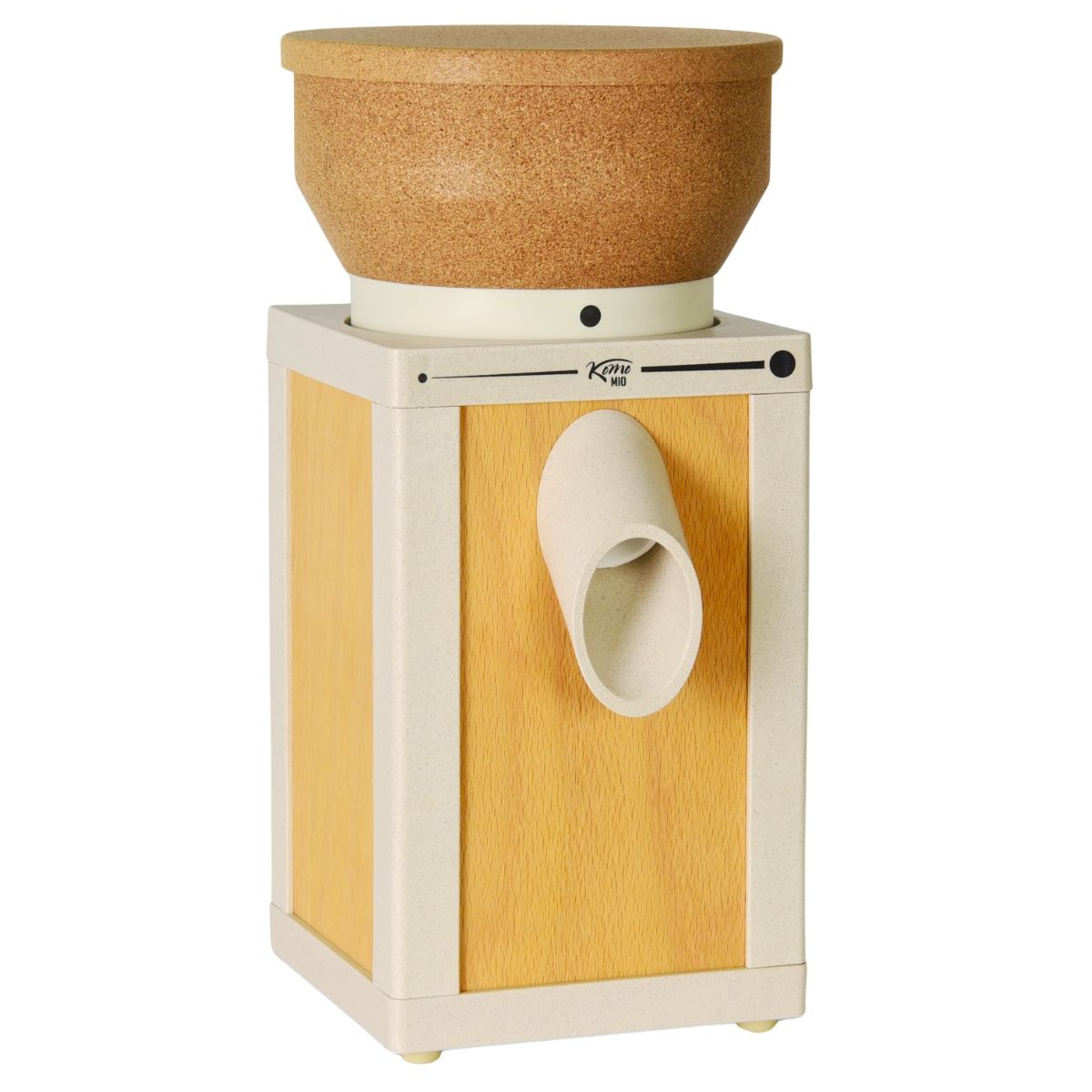
Stone burr mills grind all dry grains and beans and some can be used for small quantities of fibrous materials like dried spices. They aren’t suitable for wet or oily materials. A combination of timeless design and modern technology, these mills are heir to a tradition that spans millennia. Both electric and hand crank stone burr mills are available. Austrian-made KoMo grain mills combine the most advanced ceramic-corundum burr design with German-manufactured motors and handsome hardwood cabinetry. KoMo’s exciting new Mio line offers the same internal milling design and your choice of colorful trim options, with some components made of revolutionary new Arboblend biopolymer. Mockmill grain mills also offer ceramic-corundum burrs, and feature cabinets made entirely of Arboblend.
IMPACT GRAIN MILLS

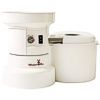
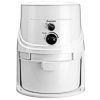
Also called micronizers, this popular design offers high speed performance at moderate cost with above-average sound level. Impact mills are electric-only. As seen in the accompanying image, impact mills feature a milling chamber with concentric rings of stainless steel fins. The fins, which never touch each other, spin at tens of thousands of revolutions per minute and burst grain kernels into small pieces as they’re impacted.

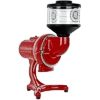
Impact mills produce flour only, typically in a range adjustable from coarser flour to very fine flour; they cannot grind a cereal texture, or coarser cracked grain. They’re suitable for dry grains and beans, and cannot grind oily, wet or fibrous materials. Impact mills (pictured left) have become very popular since their introduction about thirty years ago. The market leaders in this category are the NutriMill Classic and the WonderMill. While impact mills technically have steel burrs, generally they aren’t known as “steel burr mills”, a name that refers to slower-turning mills that crush grain between rotating steel plates or cones (described below.)
STEEL BURR GRAIN MILLS

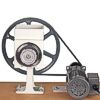
Like stone burr mills, steel burr mills turn at relatively slow RPMs, are fairly quiet, and have a wide range of adjustability that starts with cracked grain, runs through cereal and meal texture, and all the way to very fine flour. Few steel burr mills can grind to an ultra fine texture, but the Country Living mill is an exception to that rule as its large precision-cast stainless steel burrs can grind grain (even hard white rice) exceptionally fine.

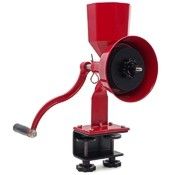
Most of our steel burr mills are available as hand-crank models, with motor components available to run them on electric power when desired. The popular hand-crank Wonder Junior Deluxe+ grain mill offers an optional adapter for operation with an electric drill. The Wonder Junior mill also crosses burr-composition categories by coming standard with both stone and steel burrs. The Wonder Junior is among the easiest-operating hand crank grain grinders on the market. With the quick change head system you can switch from grinding dry grains, beans and legumes to oily or wet grains, nuts, seeds or coffee, in just minutes.

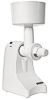
The Family Grain Mill is a modular system that allows quick-change choices of motor or hand drive units, and processing heads that include a flour mill, grain flaker, meat grinder and food processor. Made in Germany to exacting fit and finish tolerances, the Family Grain Mill offers exceptional versatility.
Because their grinding surfaces are nonporous, steel burr mills can grind some materials that are wet, oily or fibrous.
All of the steel burr grain mills in this section feature long life, replaceable grinding burrs for years and years of peak performance.
ELECTRIC, HAND CRANK, OR BOTH
A hand crank mill will let you make flour without electricity, whether the power goes out unexpectedly or you’re at a site that never has power. And to give you the plug-in alternative, motor drives are available for all of our hand crank grain grinders. There are a number of poorly-designed mills on the market that require such a high turning effort that they really aren’t of any practical use. You don’t have to worry about that problem with a mill from Pleasant Hill Grain because we don’t sell mills like that. Nevertheless, grinding hard grain into fine flour takes a fair amount of power, and many of our customers like to have a motorizing option for their hand crank mill, both for ease of use and for the higher output speed that a motor provides. Some start out with the whole setup, and others begin with the manual mill and add the motor later.
Milling speed
Flour output speed varies considerably between mills. If you’re shopping for an electric mill, consider
how important speed really is to you before you give this factor a lot of weight. Once it’s started,
an electric mill will finish its job hands-free while you go about other kitchen tasks. For commercial
users, a certain minimum production capacity may be essential. But for a home baker who typically grinds
a single batch, you can probably compensate for a somewhat slower output speed simply by starting the
mill a couple of minutes earlier. With this in mind, many shoppers find that other characteristics are
at least as important as a mill’s output speed.
HOME OR COMMERCIAL USE

The discussion on this page relates mainly to home-use grain mills. If you’re a small business owner (bakery, etc.) working with a limited budget, you may be considering using a home-use mill for small scale production grinding. But we also have excellent small commercial grain mills that are designed for continuous-run grinding, and are covered by commercial warranties.

Our most popular small commercial grinder is the KoMo XL Plus grain mill, and another commercial grain mill to consider is the Meadows 8” stone burr mill which features natural North Carolina granite burrs. We also offer larger commercial grain mills with burrs up to 30" diameter. Multi-purpose commercial grinder choices include disk mill, plate mill, steel burr mill, hammer mill, pin mill, roller mill and stone burr grain mill options. These mills grind a wide range of wet or dry materials including grain like wheat, corn and soybeans, industrial hemp, plastic, seeds including sesame, flax and teff, coffee, beans including garbanzo beans/chickpeas, crickets for cricket flour/powder, date seeds, roots, taro, cassava, bone, peppers, spices, shells, coconut hulls, wood chips, plastics, waste electronic components, popcorn, and nuts including peanuts for making peanut butter.
GRAIN FLAKERS (SOME GRINDER/FLAKER COMBOS)

Another category of grain mills is flakers. Most often used to make fresh oatmeal from oat groats (oats with the hull removed), flakers create a flake that’s thicker and chewier than the paper-thin flakes available in grocery stores. Because flaking grain requires much less energy than grinding flour, most flakers are manual.

KoMo makes two of our most popular flakers, the hand-operated KoMo FlicFloc and the electric FlocMan flaker. The modular Family Grain Mill system includes an excellent flaker that can be hand or motor operated. KoMo also builds combination mills that include electric grain mills with electric or hand crank flakers; you can see all of our flakers and grinder/flaker combos here.
GRAIN MILL FEATUREs TABLE
The table below lets you compare the features and key specs of many of our most popular grain mills, and more details are available on individual product pages. If you have questions not answered here or would just like to discuss your particular needs, our knowledgeable customer service representatives would love to talk with you.
ELECTRIC GRAIN MILL COMPARISON
|
|
|
Grain Mill |
Milling Method |
Burr Dia. |
Milling Rate 1 |
Manual Option |
Watts |
Hopper Capacity 2 |
Size |
Housing Material |
STONE BURR GRAIN MILLS |
|||||||||
|
|
Stone
(ceramic-corundum)
|
3.35"
|
8-9
|
- |
360W
|
2 lb 1 oz
|
W: 7.8"
D: 8.5" H: 13.4" |
Beech Wood or Walnut | |
|
|
Stone
(ceramic-corundum)
|
2.95"
|
5-6
|
- |
250W
|
1 lb 15 oz
|
W: 7.2"
D: 8.5" H: 12.6" |
Beech Wood | |
|
|
Stone
(ceramic-corundum)
|
2.95"
|
5-6
|
- |
250W |
2 lb 11 oz
|
W: 6.5"
D: 6.3"
H: 14.5"
|
Beech Wood & Arboblend® | |
|
Wonder Junior Deluxe+
5
|
Steel & Stone (ceramic-corundum) | 4" | Variable | Yes | 600W | 1 lb 10 oz | W: 13.5"
D: 7" H: 18" |
Metal |
|
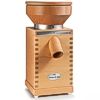
KoMo XL
6
|
Stone (ceramic-corundum) | 3.35" | 10-11 | - | 600W | 2 lb 10 oz | W: 8.2"
D: 6.9" H: 14.8" |
Beech Wood |
|
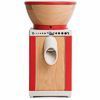
KoMo XL Plus
7
|
Stone (ceramic-corundum) | 3.35" | 10-11 | - | 600W | 2 lb 10 oz | W: 8.2"
D: 9.6" H: 14.8" |
Beech Wood |
|
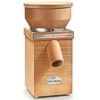
KoMo Mio
|
Stone (ceramic-corundum) | 3.35" | 8-9 | - | 360W | 2 lb 11 oz | W: 6.5"
D: 6.3" H: 14.5" |
Beech Wood & Arboblend® |
|
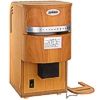
KoMo Fidibus Medium
|
Stone (ceramic-corundum) | 3.35" | 8-9 | - | 360W | 1 lb 14 oz | W: 7.25"
D: 8.5" H: 13.2" |
Beech Wood |
|
KoMo Jumbo
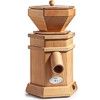
|
Stone (ceramic-corundum) | 5.5" | 17-18 | - | 746W | 4 lb 5 oz | W: 11"
D: 17.7" H: 22" |
Beech Wood |
|
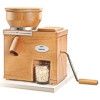
KoMo PK 1
|
Stone (ceramic-corundum) | 3.35" | 8-9 | - | 360W | 2 lb 4 oz | W: 9.5"
D" 9.7" H: 16.25" |
Beech Wood |
|
KoMo FidiFloc Medium
|
Stone (ceramic-corundum) | 3.35" | 8-9 | - | 360W | 1 lb 15 oz | W: 10.9"
D: 8.25" H: 13.25" |
Beech Wood |
|
|
KoMo FidiFloc 21
|
Stone (ceramic-corundum) | 2.95" | 5-6 | - | 250W | 1 lb 15 oz | W: 10.9"
D: 8.25" H: 13.25" |
Beech Wood |
|
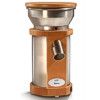
KoMo Magic
|
Stone (ceramic-corundum) | 2.95" | 5-6 | - | 250W | 2 lb 2 oz | W: 7.7"
D: 8.5" H: 13.87" |
Beech Wood |
|
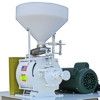
Meadows 8 inch Mill
|
Stone (granite) | 8" | 29 | - | 750W/ 1500W | 7 qts | W: 32"
D: 34" H: 57" |
Steel |
|
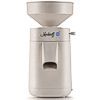
Mockmill 200
|
Stone (ceramic-corundum) | 3.7" | 7 | - | 600W | 2 lb 7 oz | W: 7.5"
D: 8.7" H: 15" |
Arboblend® |
|
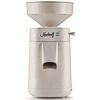
Mockmill 100
|
Stone (ceramic-corundum) | 3.7" | 3.5 | - | 360W | 2 lb 7 oz | W: 7.5"
D: 8.7" H: 15" |
Arboblend® |
|
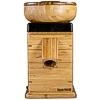
NutriMill Harvest
|
Stone (ceramic-corundum) | 3.25" | 6-7 | - | 450W | 1 lb 5 oz | W: 6.8"
D: 8.7" H: 13.5" |
Bamboo |
IMPACT BURR MILLS |
|||||||||
|
WonderMill
|
Impact | 3.5" | 24 | - | 1250W | 3 lb 12 oz | W: 16.3"
D: 8.5" H: 12" |
ABS |
|
NutriMill Classic
|
Impact | 3.5" | 17 | - | 1200W | 5 lb | W: 11"
D: 13" H: 15" |
ABS |
|
Royal Lee Mill | Impact | 6.25" | 4.7 | - | 746W | 5 lb | W: 9.3"
D: 13.8" H: 17.6" |
Cast Aluminum |
STEEL BURR MILLS |
|||||||||
|
Family Grain Mill
|
Steel burr (conical) | 1.34" 7 | 3 | Yes | 150W | 2 lb 1 oz | W: 5"
D: 7.4" H: 16.5" |
ABS |
|
Country Living Mill w/Motor
9
|
Steel burr (plate) | 5" | 0.82 | Yes | 288W | 1 lb 14 oz | W: 23.5"
D: 15.5" H: 15.7" |
Alloy |
|
Table Notes:
|
|||||||||
MANUAL GRAIN MILL FEATURES TABLE
The table below lets you compare the features and key specs of our manual grain mills, and more details are available on individual product pages. If you have questions not answered here or would just like to discuss your particular needs, our knowledgeable customer service representatives would love to talk with you.
MANUAL GRAIN MILL COMPARISON
|
|
|
Grain Mill |
Milling Method |
Burr Dia. |
Milling Rate 1 |
Housing Material |
Hopper Capacity 2 |
Size |
||
|
|
Wonder Junior Deluxe+
3
|
Steel & Stone (ceramic-corundum) | 4" | Variable | Metal | 1 lb 10 oz | W: 13.5"
D: 7" H: 18" |
||

|
KoMo Hand Grinder | Stone (ceramic-corundum) | 3.15" | Variable | Maple Wood | 1 lb 5 oz | W: 6.4"
D: 5.5" H: 12" |
||

|
GrainMaker Model 44 | Hardened Alloy Steel | 3.35" | Variable | Metal | 3 cups (wheat) | W: 8"
D: 9" H: 10.6" |
||

|
GrainMaker Model 99 | Hardened Alloy Steel | 3.35" | Variable | Metal | 6 cups (wheat) | W: 12"
D: 10.1" H: 13.75" |
||

|
GrainMaker Model 116 | Hardened Alloy Steel | 3.35" | Variable | Metal | 10 cups (wheat) | W: 14"
D: 11.6" H: 15.25" |
||
|
|
Family Grain Mill
|
Steel burr (conical) | 1.34" | 3 | ABS | 2 lb 1 oz | W: 5"
D: 7.4" H: 16.5" |
||
|
|
Country Living Mill w/Motor
4
|
Steel burr (plate) | 5" | 0.82 | Alloy | 1 lb 14 oz | W: 23.5"
D: 15.5" H: 15.7" |
||
|
Table Notes:
|
|||||||||

